

What Is Moon Mountain District AVA? The Sonoma Appellation You Should Know
If you've never heard of Moon Mountain District, you're not alone. It's one of the more specialized American Viticultural Areas (AVAs) in California — established in 2013, tucked onto the western flank of the Mayacamas range, and home to just a handful of producers. But among winemakers who care about where a grape actually grew, Moon Mountain District wine has quietly become a kind of shorthand for something specific: high elevation, rocky soils, and a growing season where most vineyards sit above the summer fog line.
For anyone who loves California wine but feels like they keep drinking the same thing, learning about this pocket of Sonoma County is worth a few minutes. It explains a lot about why certain bottles taste the way they do — and why Allium chose to plant our roots here.
Where Moon Mountain District Actually Is
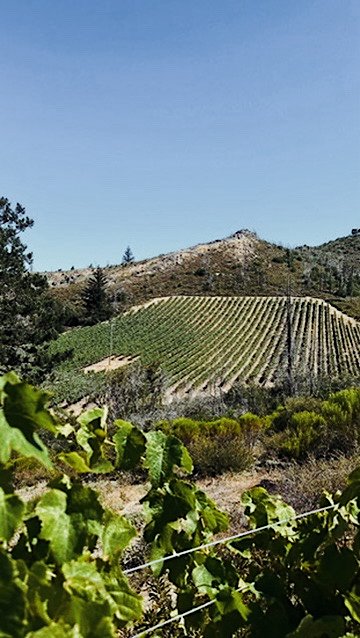
Moon Mountain District is a sub-appellation of Sonoma Valley, sitting on the Sonoma side of the Mayacamas Mountains — the ridge that separates Sonoma and Napa counties. The AVA runs from roughly 400 feet of elevation at its lowest border to just over 2,200 feet at its highest, though most of its planted vineyards live between 800 and 1,800 feet.
That vertical range matters more than it sounds. In Napa, the equivalent elevations are covered by the Mount Veeder AVA; in Sonoma, this mountainous zone was folded into generic "Sonoma Valley" labels for decades before growers successfully petitioned for their own appellation. The argument was straightforward: wine grown at 1,500 feet on a rocky ridge has almost nothing in common with wine grown on the valley floor ten miles below. They deserved a name of their own.
The AVA covers about 17,600 acres on paper, but only around 1,500 of those are actually planted to vineyard. Most of the rest is too steep, too forested, or too rocky to farm. That scarcity is part of why Moon Mountain District wine tends to come in small lots — there just isn't that much of it.
What High Elevation Does to a Grape
The defining feature of Moon Mountain District is elevation, and elevation changes a few things that end up in the glass.
First, temperature. Vineyards above the fog line get more consistent sunshine during the day but cool down sharply at night. Those cool nights slow the ripening process, which preserves natural acidity in the fruit. Valley-floor grapes in a warm California vintage can lose their acid quickly; high-elevation grapes hold onto theirs, giving wines a brightness and tension that doesn't need to be corrected in the cellar.
Second, soils. The Mayacamas are volcanic in origin, and Moon Mountain District vineyards sit on a mix of red iron-rich soils, decomposed basalt, and rocky outcrops. Vines planted in this kind of ground don't grow big — they have to work for their water and nutrients, which naturally limits yields. Smaller crops, more concentrated fruit, thicker skins. It's the opposite of the lush, deep-soil farming that makes valley floors so productive.
Third, light. At elevation, the sun is more intense, and UV exposure is stronger. Grapes respond by developing thicker skins and more phenolic compounds — the building blocks of color, tannin, and flavor. This is one reason high elevation Sonoma wine tends to show more structure and depth than its elevation-equivalent valley neighbor, even from the same grape variety.
None of this is magic. It's just geography doing what geography does when you farm on a mountain.
What Grows There — and What Doesn't
Moon Mountain District is historically known for red wine, especially Cabernet Sauvignon, Zinfandel, and Syrah. Some of the oldest continuously farmed vineyards in Sonoma County sit within its boundaries — the Monte Rosso vineyard, planted in the 1880s, is probably the most famous example.
The Bordeaux varieties are particularly well suited here. Above the fog line, warm days and cool nights give Cabernet Sauvignon and Cabernet Franc the hang time they need to fully ripen without losing their acid backbone. Cavedale vineyard sits above 1,500 feet within the district, and our Cabernet Franc and Cabernet Sauvignon grown there taste like the place — structured, savory, and a long way from the softer expressions you'd find on the valley floor.
What doesn't grow well here: anything that needs deep, forgiving soil. Pinot Noir is generally planted in cooler, lower Sonoma zones. Big, showy Chardonnays tend to come from the valley floor. Moon Mountain District isn't trying to be everything — it's a specialized place that rewards specialized farming.
Why Small Appellations Matter
American wine is slowly moving toward the kind of specificity European wine regions have always had, where a label tells you something real about where the wine came from. A bottle that just says "Sonoma County" could be grown a mile from the ocean or a thousand feet up a mountain — totally different climates, totally different wines.
Sub-appellations like Moon Mountain District exist to close that gap. When you see the name on a label, you know something: the grapes were grown at altitude, on rocky volcanic soil, in a corner of Sonoma that produces a specific kind of wine.
It's also part of why Allium exists. We farm one of the highest-elevation blocks in the district because we believe the place can speak for itself when the farming and winemaking get out of the way. If you want to taste what Moon Mountain District actually means in a glass, our Collection wine club ships hand-selected releases from these vineyards a few times a year — the closest thing we can offer to walking the ridge with us.
Explore our wines or join the Collection at alliumwines.com.